Primrose
Primula vulgaris
Print fact sheet (PDF)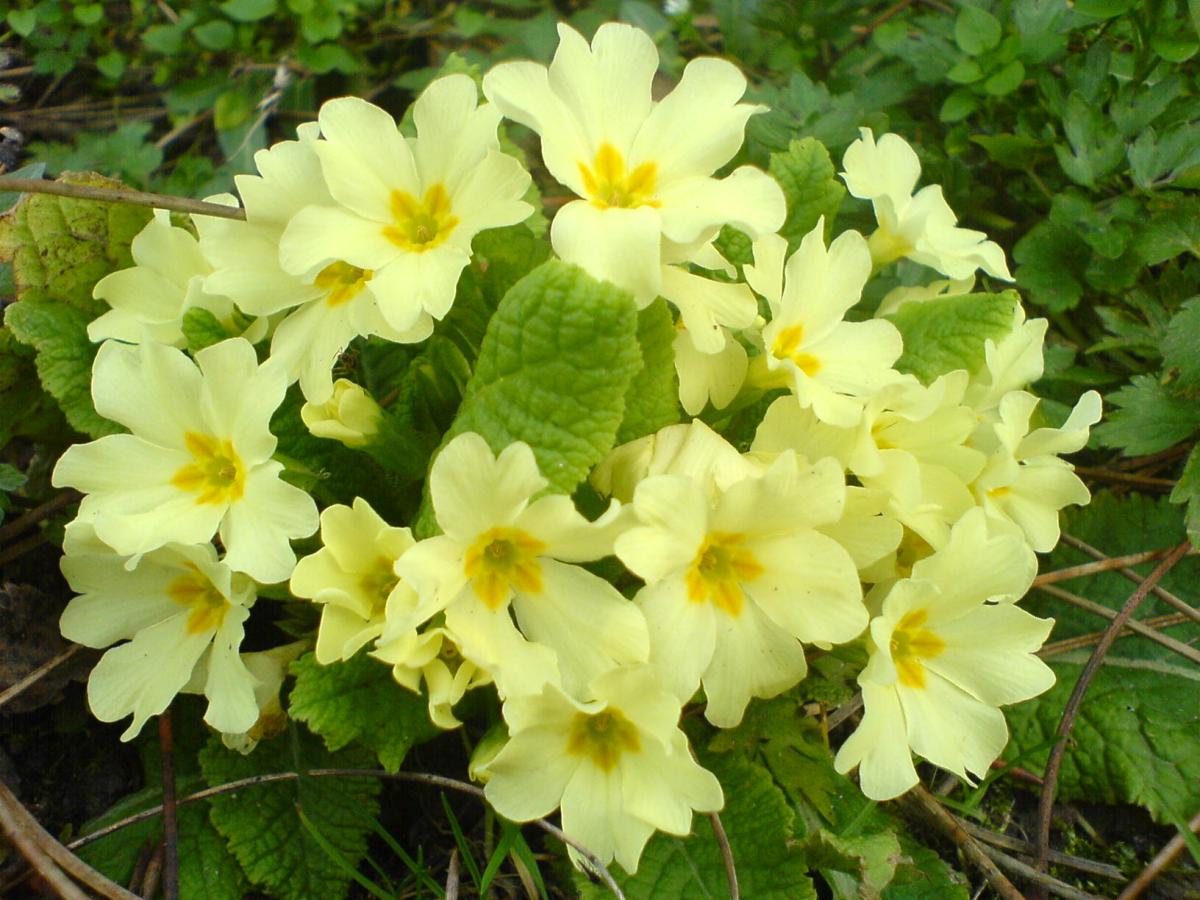
Comes in two forms — pin-eyed and thrum-eyed — so a flower can never pollinate itself.
A low rosette perennial with crinkled, wrinkled, tongue-shaped leaves and pale creamy-yellow flowers, each on its own hairy stalk, with a deeper yellow eye. Primroses grow on hedge banks, woodland edges, railway cuttings and shaded verges around Dumfries, and are among the earliest and most welcome flowers of the year.
Behaviour
Look into the centre of the flower and you will see either a green pinhead — the stigma — or a ring of stamens. Individual plants are one or the other, pin-eyed or thrum-eyed, and a pin can only be successfully pollinated by a thrum and vice versa, an arrangement Darwin worked out and which enforces cross-pollination. It hybridises with cowslip to give the false oxlip.
When to see it
Quick facts
- Family
- Primroses (Primulaceae)
- Height
- 10–15 cm
- Status
- Native; common on banks and woodland edge
Photo by No machine-readable author provided, CC BY-SA 3.0, via Wikimedia Commons