Sessile Oak
Quercus petraea
Print fact sheet (PDF)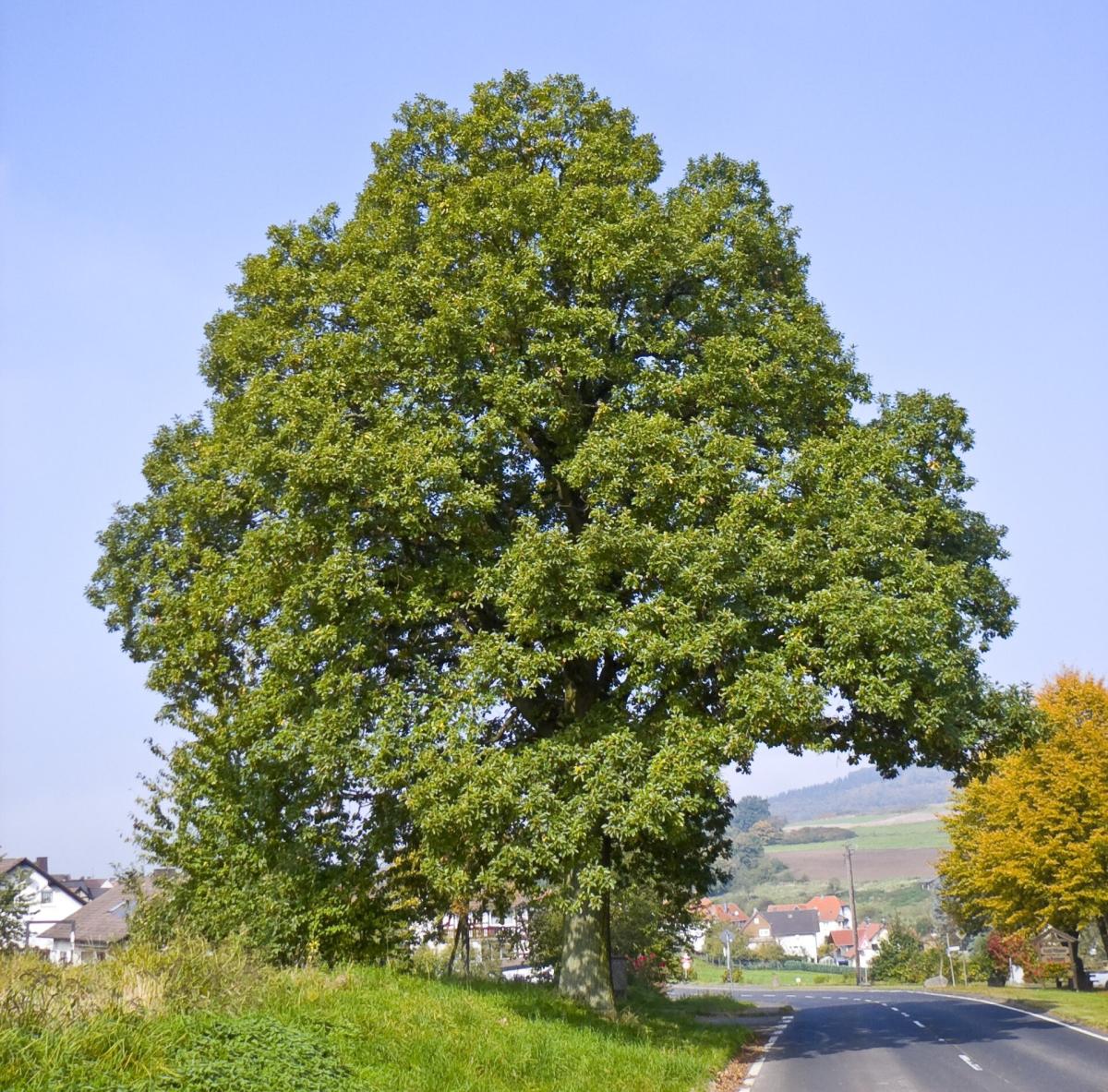
The oak of the western hanging woods — acorns sit tight to the twig, leaves have long stalks.
A large deciduous tree, and the characteristic oak of the upland west. The way to separate it from pedunculate oak is exactly reversed: sessile oak has acorns with no stalk, sitting directly on the twig, and leaves with a long stalk and no ear-like lobes at the base. It dominates the steep, acidic hanging oakwoods of Galloway, which are among the most important habitats in the region.
Behaviour
Sessile oak tolerates thin, acid, upland soils better than pedunculate oak, which is why it holds the valley sides. Those western oakwoods, kept damp by Atlantic weather, carry exceptional communities of mosses, liverworts and lichens, and are the breeding habitat of pied flycatcher, redstart and wood warbler. A mature oak supports several hundred species of insect.
When to see it
Quick facts
- Family
- Beeches and oaks (Fagaceae)
- Height
- Up to 40 m
- Status
- Native; dominant in Galloway's western oakwoods
Photo by Willow, CC BY 2.5, via Wikimedia Commons