Wall Rue
Asplenium ruta-muraria
Print fact sheet (PDF)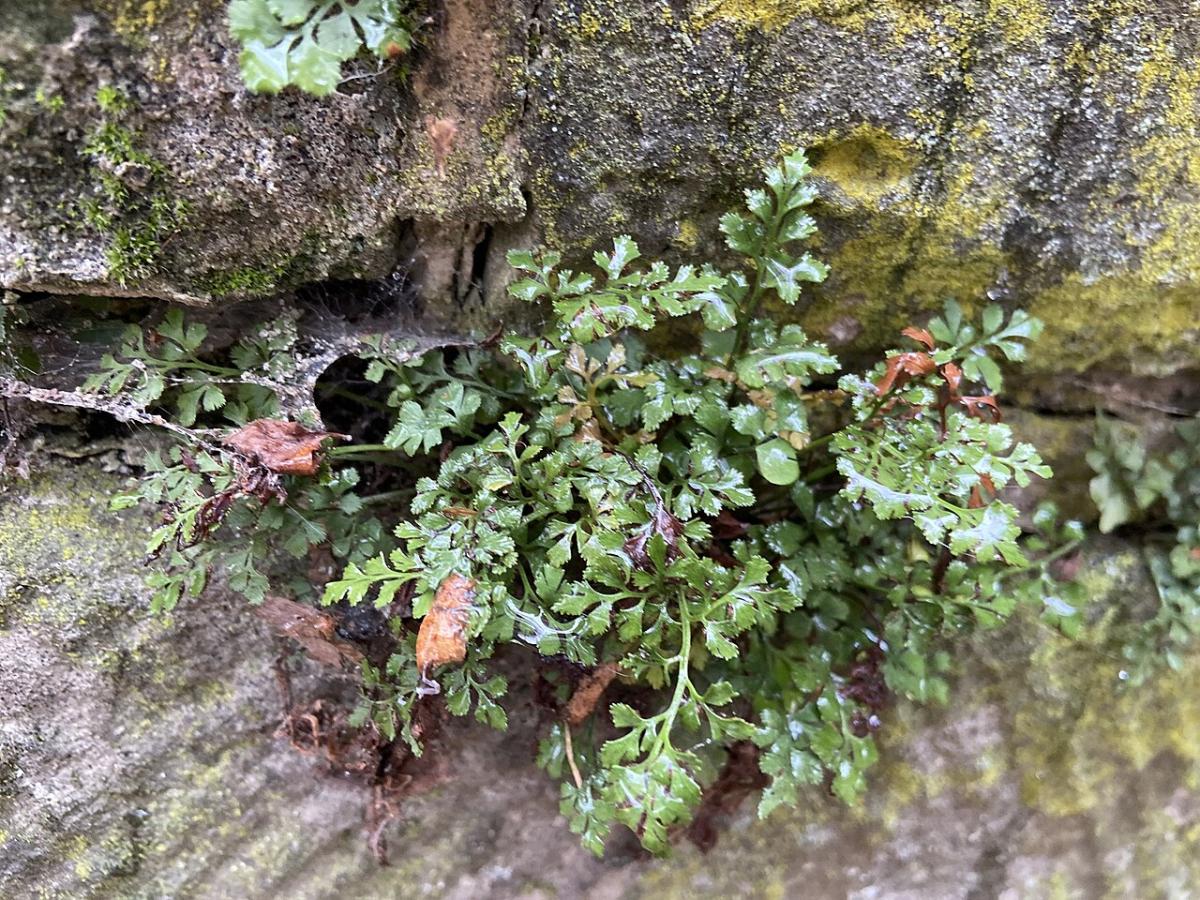
A fern so small it's easy to mistake for a patch of moss.
Wall rue is one of Britain's smallest ferns, forming tufty little clumps in the mortar joints of old walls, bridges and stone buildings, its blue-green fronds barely reaching the size of a thumbnail cluster. The fronds are neatly divided into small, rounded, fan-shaped leaflets that give the plant a slightly fleshy, almost rue-like look — hence the name, though it isn't related to true rue at all. Like its close relative maidenhair spleenwort, with which it often grows side by side, wall rue never flowers; it reproduces by releasing spores from brown patches on the underside of its fronds through summer. It's evergreen and can be found in its wall crevices in any month, though growth slows right down in winter and dry summers can leave the fronds curled and shrivelled until rain revives them. Old lime-mortared walls around Dumfries are prime habitat.
Behaviour
Wall rue survives extreme drought by curling its fronds tightly inward, effectively shutting down until rain returns — a trick that lets it exploit the driest, most exposed wall tops where few other plants can compete. Spores released from the frond undersides drift on the wind to colonise fresh mortar joints, often appearing on newly repointed walls within a few years. It tolerates lime-rich, alkaline conditions that few ferns can handle.
When to see it
Quick facts
- Family
- Spleenworts (Aspleniaceae)
- Frond
- 2–10 cm, blue-green, fan-shaped leaflets
CC0, via Wikimedia Commons