White Clover
Trifolium repens
Print fact sheet (PDF)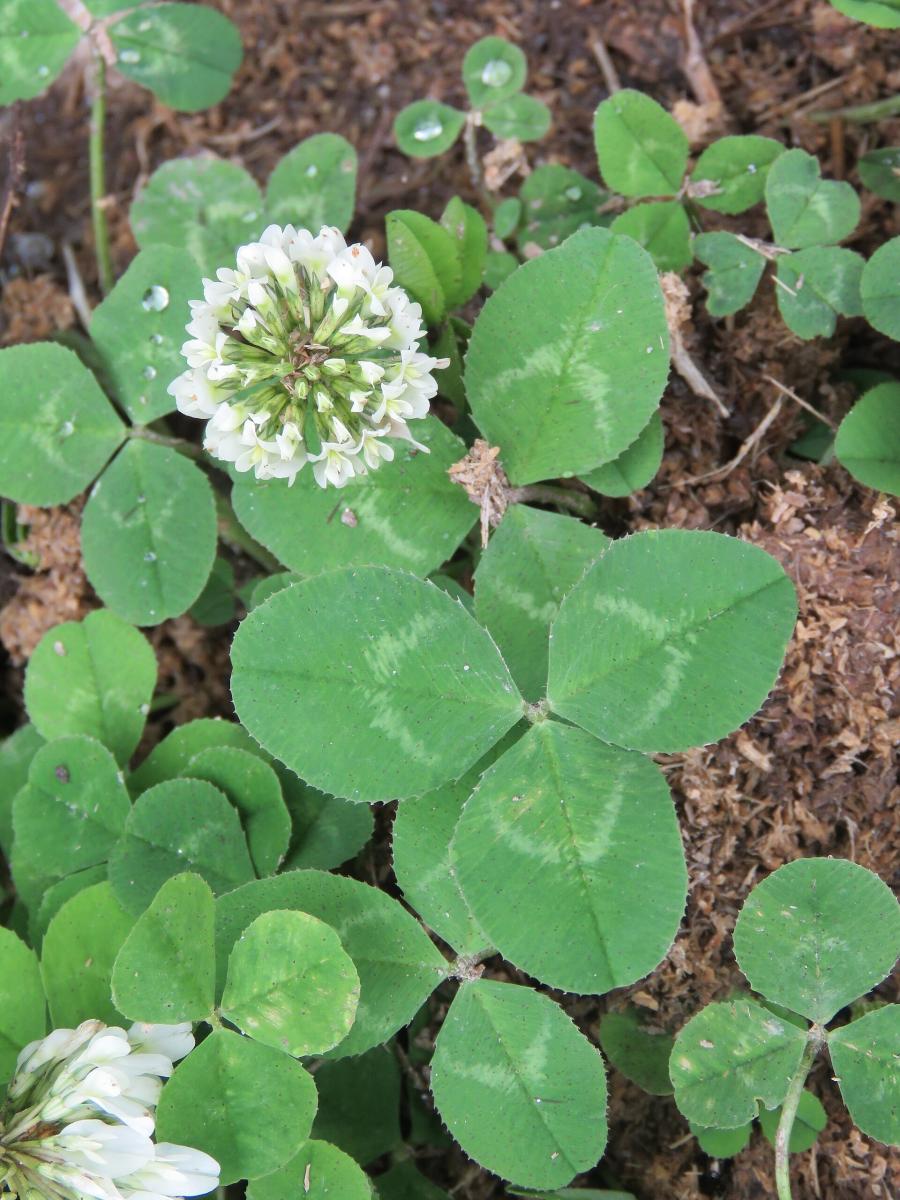
The clover in your lawn — and the one people search for a fourth leaf on.
A low, creeping perennial rooting at the nodes, with trefoil leaves usually bearing a pale chevron, and rounded heads of small white — sometimes pink-tinged — pea flowers on long stalks. White clover is abundant in lawns, pasture, verges and playing fields throughout the Dumfries area, and tolerates close mowing and heavy grazing.
Behaviour
The florets are much shorter-tubed than red clover, so honey bees and short-tongued bumblebees can work them easily — which is why white clover is one of the main sources of British honey. Creeping stems root as they go, letting it survive mowing and trampling. Leaving clover in a lawn is one of the simplest ways to feed pollinators through the summer.
When to see it
Quick facts
- Family
- Peas (Fabaceae)
- Height
- 10–30 cm, creeping
- Status
- Native; abundant in grassland and lawns
Photo by Vinayaraj, CC BY-SA 4.0, via Wikimedia Commons