Bullfinch
Pyrrhula pyrrhula
Print fact sheet (PDF)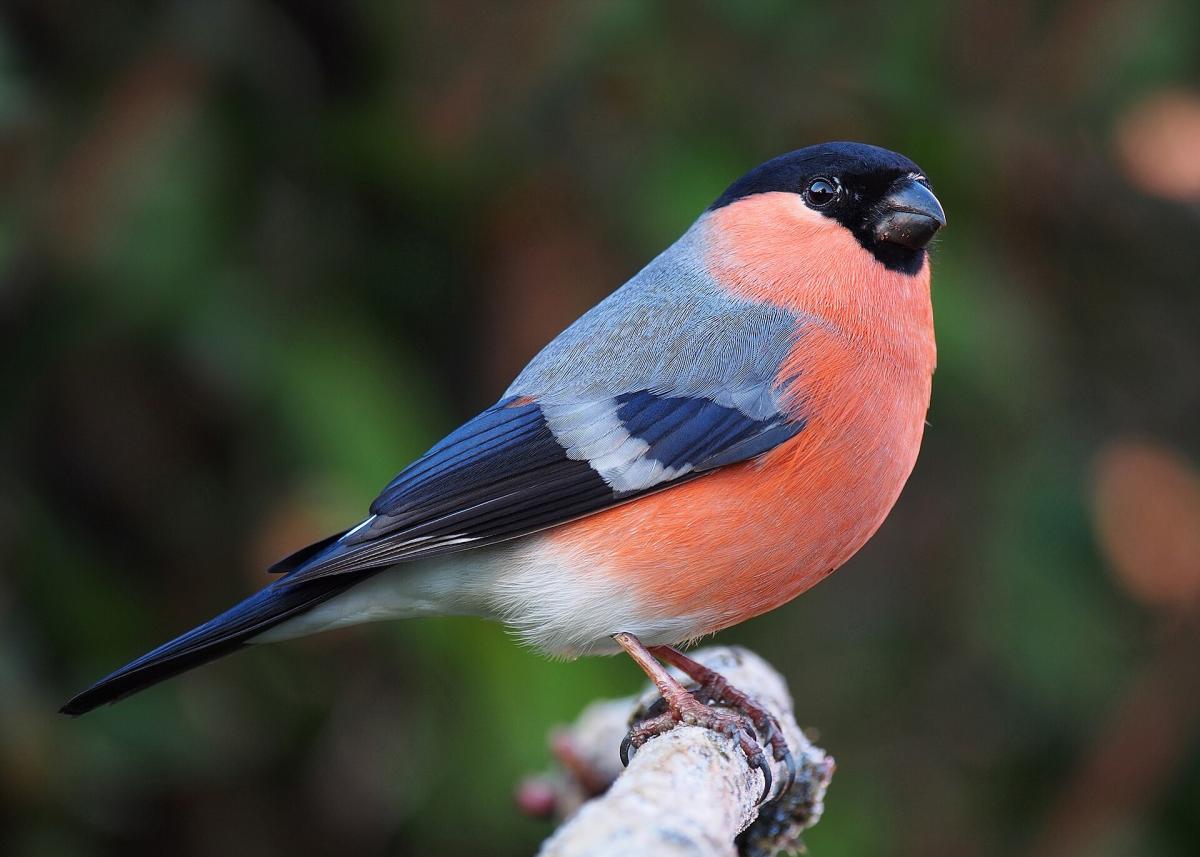
A soft, mournful piping from inside a hedge, then a flash of white rump as it slips away.
A thickset, bull-necked finch with a black cap and bill. Males have an astonishing rose-pink breast; females are a warm greyish-buff, and both show a brilliant white rump that is usually the last thing you see. Bullfinches are shy birds of thick hedgerow, woodland edge and mature gardens around Dumfries, far more often heard than watched, and usually encountered in pairs rather than flocks.
Behaviour
Bullfinches feed on buds in late winter and early spring — a habit that made them a serious pest of fruit orchards and, for centuries, a persecuted bird. They take seeds, and in summer feed their young on a paste of seeds and insects carried in special throat pouches. The call is a soft, low, slightly sad single-note whistle, easy to miss but the most reliable way to find them.
When to see it
Quick facts
- Family
- Finches (Fringillidae)
- Size
- 15–16 cm · sparrow-sized but heavier
- UK status
- Amber-listed
Photo by Francis Franklin, CC BY-SA 3.0, via Wikimedia Commons