Bramble
Rubus fruticosus agg.
Print fact sheet (PDF)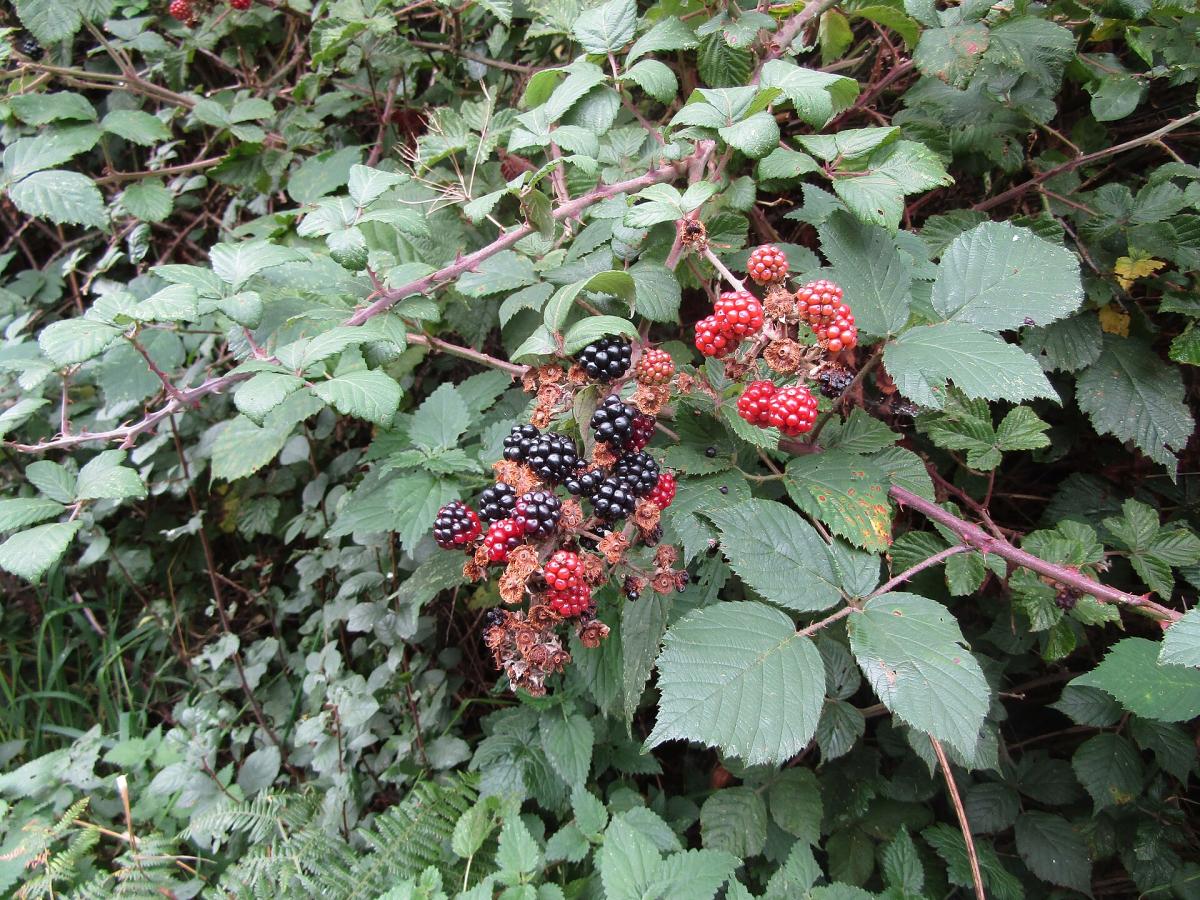
Not one species but hundreds of near-identical microspecies — and the best free food there is.
The blackberry: a vigorous, prickly scrambler that forms dense thickets in hedgerow, woodland edge, waste ground and gardens throughout the region. White or pink flowers appear through the summer, followed by fruit that ripens red then black. What we call bramble is not a single species but an aggregate of hundreds of microspecies that reproduce without cross-fertilisation.
Behaviour
Long arching stems root where the tip touches the ground, so a bramble patch advances steadily outwards. It is one of the most valuable wildlife plants here: flowers for bees, butterflies and hoverflies over months, fruit for birds and mammals, and dense thorny cover for nesting birds and hibernating hedgehogs. Ripening is staggered, so a single stem carries flower and fruit at once.
When to see it
Quick facts
- Family
- Roses (Rosaceae)
- Height
- Scrambles to 3 m; thickets much wider
Photo by Kolforn (Kolforn) I'd appreciate if you could mail me (Kolforn@gmail, CC BY-SA 4.0, via Wikimedia Commons