Rowan
Sorbus aucuparia
Print fact sheet (PDF)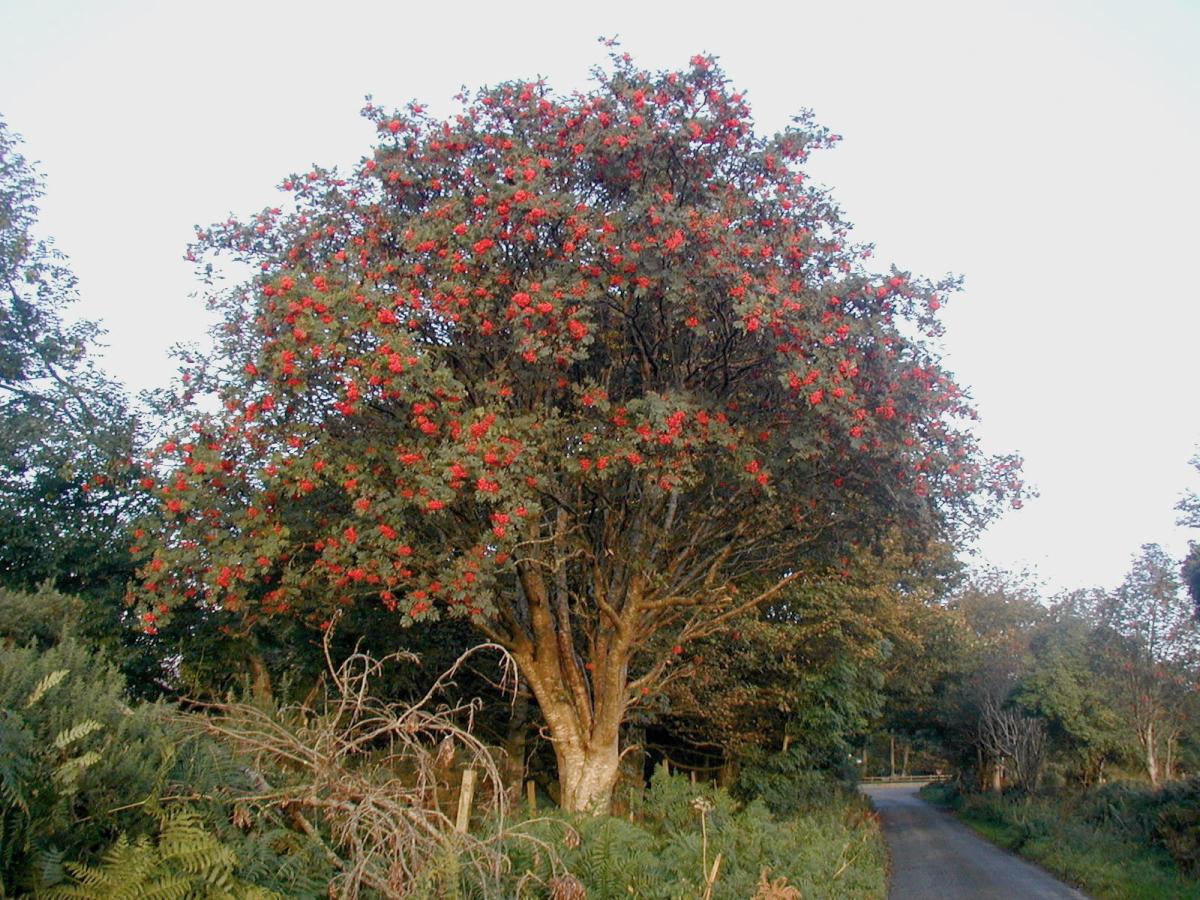
Planted by doorways for centuries to keep witches out — and stripped by thrushes every autumn.
A slender deciduous tree, also called mountain ash, with smooth grey bark, pinnate leaves of many toothed leaflets, flat creamy flower heads in May and dense bunches of scarlet berries from August. Rowan grows higher up the hill than almost any other tree here and is common on Galloway crags, in hedgerows and planted in gardens and streets across Dumfries.
Behaviour
The berry crop is heavily taken by blackbirds, mistle thrushes and, in autumn, arriving fieldfares and redwings — a good rowan can be stripped in days. Seeds pass through the birds and are dispersed, including onto ledges and crags where sheep cannot reach the seedlings. Rowan has deep folk associations with protection, and was planted beside doors and byres to ward off harm.
When to see it
Quick facts
- Family
- Roses (Rosaceae)
- Height
- Up to 15 m
- Status
- Native; common, and grows higher than any other local tree
Photo by Eeno11, CC BY-SA 3.0, via Wikimedia Commons